
SOO #02 - Hebe Camargo
The golden-platinum-haired sphinx of Brazilian TV

If you ask Brazilians what comes to mind when they hear the name Hebe Camargo, you’ll get a deluge of descriptions as vast as the sequins on her wardrobe. Was she a TV legend? Absolutely. Was she glamorous? To a blinding degree. Was she also—dare I say it—obsessed with being everyone’s best friend? More than even she would admit. Hebe’s charm was the kind that could power a small country, and by small country, I mean her own personal kingdom of perpetual spotlight.
Let’s be clear: Hebe Camargo did not become a cultural icon by being shy, demure, or anything remotely close to low-profile. No, she wore diamonds that rivalled the Rock of Gibraltar and offered hugs like they were going out of style. She had the kind of stage presence that felt less like she was hosting a show and more like she was hosting you in her personal boudoir, surrounded by sparkling chandeliers and banquettes plush enough to swallow you whole. Hebe was glamorous in a way that didn’t just make her relatable; it made her untouchable. And she knew it.
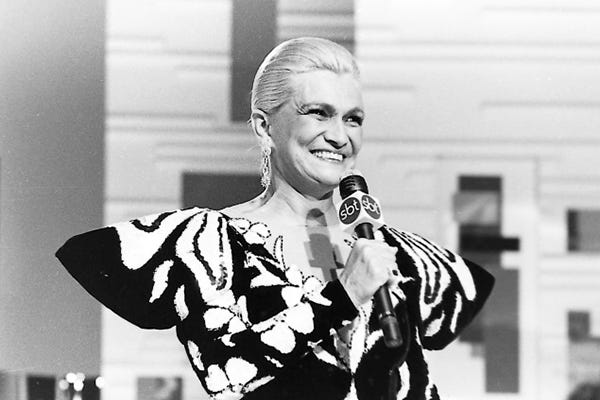
Hebe Maria Monteiro de Camargo was born on March 8, 1929, in Taubaté, São Paulo—a town better known for coffee farms and quiet Catholicism than future television royalty. Her father, a violinist, filled the house with music, and her mother, a strict but devoted homemaker, kept her daughters grounded in discipline. The family was not wealthy, but it was rich in resilience. Hebe grew up in a house where appearances mattered, even when resources were thin. Her sense of spectacle may have been born the day she first played dress-up with her mother’s limited but carefully chosen accessories. That girl in Taubaté, already fascinated by beauty, mirrors, and microphones, was destined to swap the church pews of the interior for the spotlights of São Paulo.
She moved to the capital in her teens, initially to help her sister Ester, a radio actress. But it didn’t take long for producers and composers to notice Hebe’s quick wit and natural timing. She made her singing debut on Radio Tupi in the early 1940s, performing boleros with a vulnerability that disarmed and seduced. At just 15, she was already navigating the male-dominated world of show business with a blend of innocence and instinct. Her first big opportunity came when she joined the cast of "O Mundo É das Mulheres," a television show that would later be seen as groundbreaking. But back then, she was just another girl with a microphone and a big dream—except Hebe had something the others didn’t: presence.
Her voice was lovely, yes, but it was her effervescent personality that truly stole the show. By the 1950s, when Brazilian television was still in its infancy, Hebe made the leap to the small screen. It was there, in the flickering black-and-white glow of early broadcasts, that she found her true calling—not as a singer, but as a host, a conversationalist, and, most importantly, a star. She wasn’t content to simply present a programme; she wanted to own it, to sculpt it in her image, to turn every episode into a salon of glitz, gossip, and unfiltered heart.
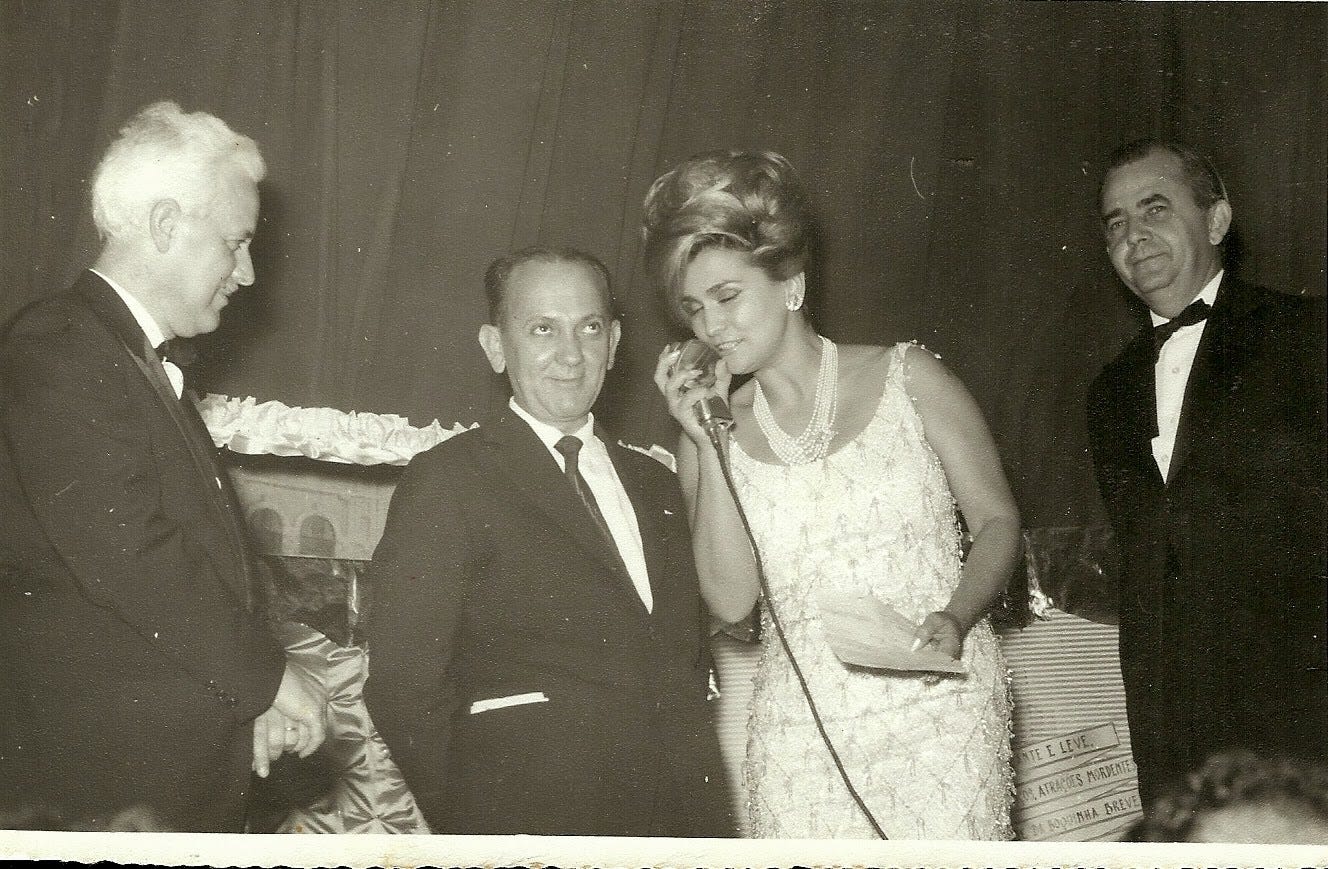
Hebe had a distinctive way of communicating that was less about exchanging ideas and more about asserting opinions. She would laugh, she would sigh, she would grab the hands of her guests with the force of a medium delivering messages from another realm. Hebe Camargo was like a stage hypnotist who drew you in with her warmth and kept you there with her unpredictable mix of statements. “Gracinha!” she’d exclaim to guests and fans alike, a declaration that could be either endearing or a strategic way to prevent anyone from speaking back. When Hebe said, “gracinha,” it was less a compliment than it was a command. She was not asking for attention; she was assuming it.
Her television set, in its prime, was a visual spectacle unmatched by any other. Liberace’s living room might have seemed restrained by comparison. Hebe’s penchant for silver and sparkle wasn’t merely a fashion choice—it was a declaration of her identity. She ruled her shimmering domain like a benevolent monarch, doling out warmth and wit in equal measure. Every detail of her stage, from the plush sofas to the perfectly placed lighting, was designed to reflect her personality: extravagant, welcoming, and utterly unforgettable.
And Hebe’s laugh—oh, the laugh. It was like a champagne cork that never quite flew off, a perpetual effervescence that was somewhere between genuine joy and an almost practiced glee. Hebe could laugh at anything, and frequently did, as if to remind everyone watching that life, for her, was a nonstop gala. It was a laugh that belonged to someone who had either unlocked the secrets of happiness or had simply decided that relentless positivity was a lot easier than examining anything too deeply. In truth, it was both: Hebe had seen enough of life to know its tragedies, but had made the conscious choice—on stage and off—to throw glitter on the darkness and keep dancing.
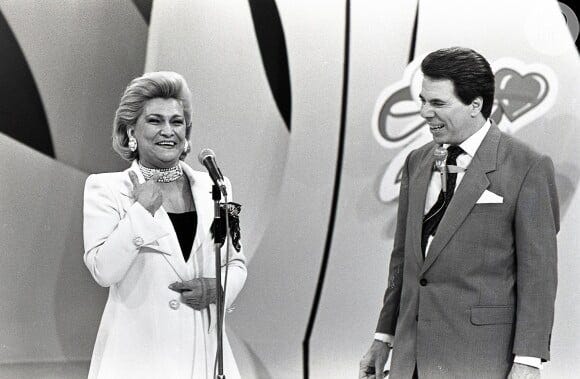
But beneath the glitter and gaiety, there was genuine depth to Hebe. She was never afraid to voice her opinions, no matter how controversial they might be. Her show became a platform for championing causes close to her heart—from women’s rights to outspoken support for the LGBTQ+ community. In an era when such stances were far from common or safe, Hebe was one of the first mainstream Brazilian television figures to openly embrace and defend LGBTQ+ rights. Yet, for all her progressivism in some areas, she remained staunchly conservative in others. A deeply religious and devoted Catholic, she never hesitated to affirm her faith and held traditional views on family and morality that sometimes clashed with her more liberal positions. This complex contradiction didn’t diminish her; it made her all the more fascinating—a woman who could advocate for change while still holding on to the past. Hebe’s empathy for the underdog, combined with her glamorous persona, created a unique duality: she was a queen who never forgot her roots, a diva with a heart as big as her hair.
She was also unafraid of challenging authority. Despite her widespread appeal across the political spectrum, Hebe didn’t shy away from subtle—and occasionally not-so-subtle—jabs at the military dictatorship that ruled Brazil for decades. Her charm served as a shield, allowing her to voice criticisms others dared not utter. At the same time, she maintained friendships and alliances with powerful figures, expertly navigating the political landscape like a seasoned diplomat. Although she despised censorship and championed freedom of speech, Hebe was not a radical. She admired strong leadership and valued stability, often expressing nostalgia for what she perceived as a more respectful and orderly past.
In many ways, Hebe was a sphinx draped in gold—smiling, enigmatic, and always a few steps ahead of those trying to decode her. Her contradictions made her complex and compelling: a woman who could speak truth to power yet keep her crown intact; who balanced progressive ideals with conservative values; who embraced the spotlight with warmth yet guarded her mysteries with discretion. It is precisely this blend of glamour and grit, openness and enigma, that sealed Hebe Camargo’s place not only in Brazilian television history but also in the hearts of millions who saw in her both a queen and a mirror.

Her personal life was just as theatrical as her public persona. Her marriage to Lélio Ravagnani was, by all accounts, a grand love affair filled with devotion, loyalty, and the occasional dramatic outburst. Hebe adored Lélio, often crediting him with being the steady force in her whirlwind life. Their love was the kind that withstood the pressures of fame, proving that even a diva needed a reliable leading man. But it wasn’t all roses: according to close sources, their relationship had its share of stormy nights and slammed doors—including tales of jealousy, possessiveness, and temper. There were whispered stories of Lélio’s rage, of Hebe locking herself in a room while he pounded on the door outside. And yet, she stayed. Not out of submission, but because she believed in the complex kind of love that refuses to be reduced to fairy tale tropes. It wasn’t a fairy tale, but something more real and, in many ways, more admirable: a messy, lasting devotion forged through the fires of fame.
And then there was her son, Marcello, who lived under the considerable shadow of a mother who belonged as much to Brazil as she did to him. Their relationship, while affectionate, was inevitably shaped by her larger-than-life presence. Hebe was fiercely protective of Marcello, and his birth, after years of miscarriages, was nothing short of a miracle in her eyes. She once said motherhood was her greatest accomplishment—perhaps the only thing that eclipsed her love for the camera. But being the son of Hebe Camargo came with a high voltage spotlight, and Marcello had to learn to navigate a public that felt entitled to his mother. Later in life, he would speak with both pride and burden about that legacy, acknowledging the impossible task of living up to a figure who was equal parts myth and matriarch.
Hebe’s friendships, too, were a world of their own—legendary, glamorous, and occasionally explosive. She was inseparable from Nair Bello, whose comedic timing rivalled Hebe’s own, and together they were a walking sitcom. Lolita Rodrigues, another pillar of old-school television, was her on-and-off screen confidante. Their laughs, their quarrels, their glamorous misadventures—it was the stuff of tabloids and television specials alike. Hebe had a sixth sense for people and surrounded herself with those who made her shine brighter, but she was also known to cut ties when crossed. She collected friends like she collected jewellery: dazzling, carefully chosen, and worn proudly, until they no longer matched the outfit. In private, she was sentimental about loyalty—she never forgave betrayals, but when she loved someone, she loved with a ferocity that could scare even the boldest of hearts.
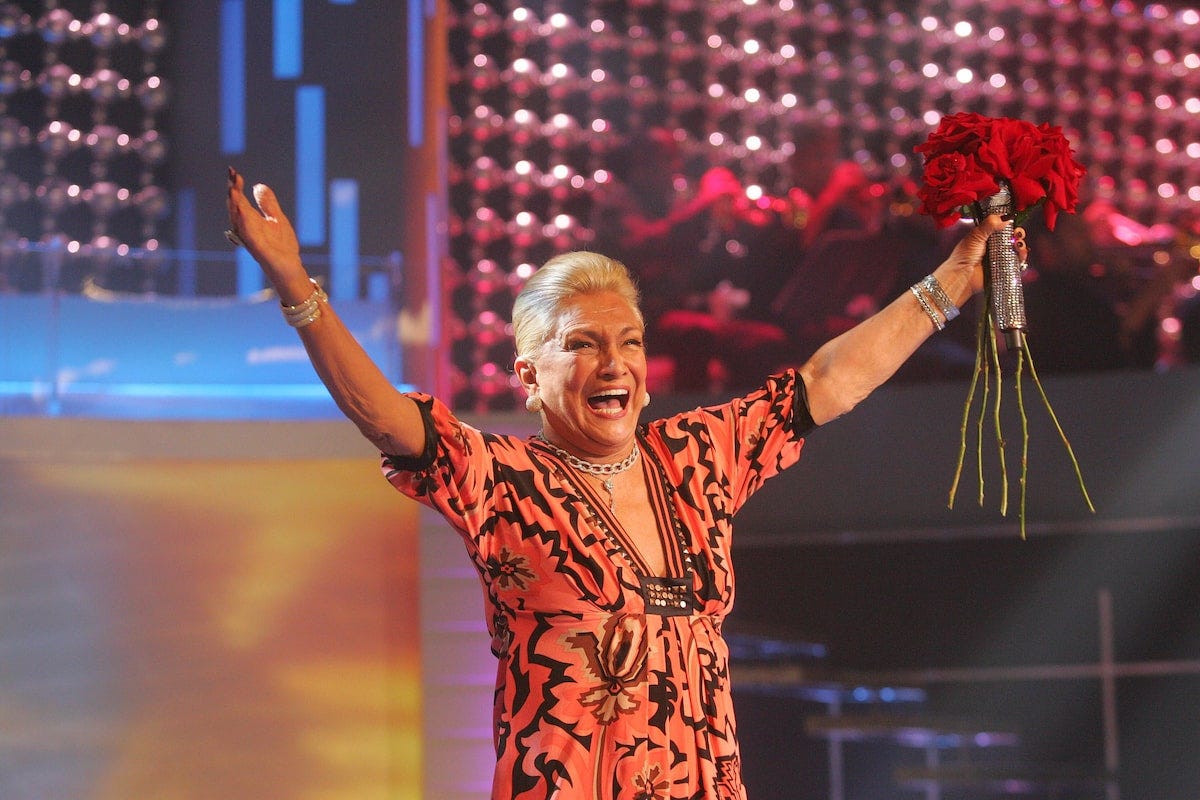
In her later years, Hebe’s golden-platinum hair became more than just a style—it was her unmistakable signature, a radiant crown that symbolised her resilience and unyielding spirit. Age might have slowed her body, but it never dimmed her presence. She refused to fade quietly into the background or let the passage of time diminish her vibrant essence. On television, she continued hosting with that same infectious laughter and effervescent charm that had defined her career for decades. Behind the dazzling smiles and sparkling gowns, however, a tougher battle was unfolding. In 2010, Hebe was diagnosed with cancer, and the glamorous star faced grueling treatments with the same determination and grace that had become her trademark. She never shied away from the public eye, appearing on screen even when visibly weakened, always offering reassurance and warmth to her millions of viewers. Surgeries, chemotherapy sessions, and long hospital stays tested her endurance, yet nothing could extinguish her enduring love for life. Even in moments of profound vulnerability, she would flash that unmistakable smile—part defiance, part gratitude—and declare her thankfulness for every single day.
Hebe’s final years were a testament to a spirit that refused to bow to illness or despair. Her ongoing battle with cancer became part of her narrative, transforming her from mere television icon to an emblem of courage and hope. Rather than retreating, she embraced life fully until the very end, showing her audience that suffering did not mean surrender. It was the final act of a woman who had always insisted that life—however brutal, however beautiful—was still worth celebrating. Her resilience was not just physical but deeply spiritual, as she drew strength from her faith, her family, and the countless fans who adored her. In those last appearances, despite her frailty, she radiated a powerful message: that joy could be found even in the darkest moments.
When Hebe Camargo passed away on September 29, 2012, Brazil mourned the loss of a cultural titan whose legacy sparkled as brightly as the sequins she wore. The outpouring of grief was immense and heartfelt—fans, colleagues, politicians, and everyday people alike came together to pay tribute to a woman who had been a constant source of joy, laughter, and inspiration for generations. To the very end, Hebe remained true to herself—a woman who refused to surrender to time or illness, a queen who never abdicated her throne. Even in her final television appearances, with her body weakened but her spirit undimmed, she reminded the world that life, no matter how fleeting, was meant to be celebrated with gusto and grace. Hebe Camargo did not merely endure her final chapter; she shone through it, leaving behind a radiant legacy that will continue to inspire long after the cameras stopped rolling.
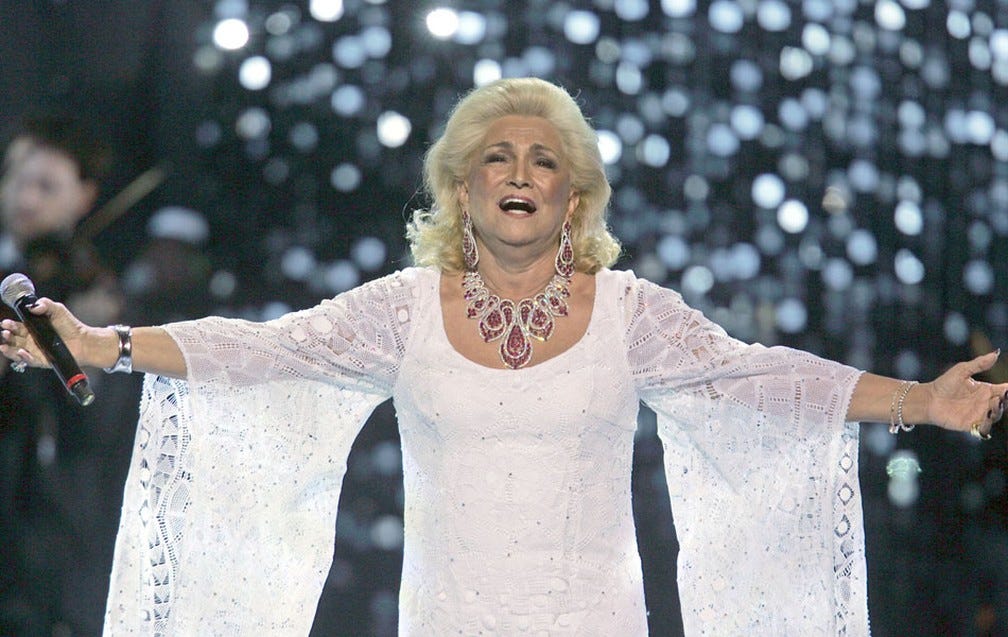
To call Hebe Camargo merely a “TV host” is like calling the Eiffel Tower “a big structure.” Such a label barely scratches the surface of what she represented. Hebe was an icon, a phenomenon, a force of nature wrapped in sequins, silver, and an aura so dazzling it could blind the unprepared eye. Her life was nothing less than a grand celebration of extravagance — from her towering platinum hair to the floods of glitter that accompanied every entrance — but beneath the spectacle was a warmth that made her profoundly relatable to millions of Brazilians. She didn’t just present television shows; she conjured moments that felt like personal invitations into a world where glamour met genuine affection, where every laugh, every embrace, and every “gracinha” was an act of magic. Hebe had the rare ability to turn a simple chat into a memory, an interview into an event, and a programme into an enduring cultural ritual.
In a society where women’s contributions to entertainment have often been undervalued, dismissed, or overshadowed, Hebe stood tall—both literally, perched on her signature high heels, and figuratively, as a towering figure of charisma, resilience, and authenticity. She was unapologetically herself: bold, compassionate, and fiercely determined. Through decades of changing social tides, technological revolutions, and political upheavals, she remained a constant, a beacon of strength who showed that life was meant to be lived fully, loudly, and, above all, fabulously. Her legacy is not just about fame or ratings but about breaking barriers for women in media and culture, proving that glamour and substance are not mutually exclusive but can coexist in the same dazzling package.
Hebe Camargo wasn’t just the queen of Brazilian television; she was its heart, its soul, its unmistakable pulse. While the lights on her set may have dimmed with her passing, the glow she left behind continues to shine brilliantly—illuminating the path for generations of entertainers, women, and dreamers to come. Her spirit lingers in every sparkling gown, every heartfelt laugh, and every moment of unapologetic celebration of life’s absurdities and joys. Hebe taught us that to live is to shine—boldly, brightly, and on your own terms.
Ela é uma figura materna para divas pops do Brasil.
Texto interessante